
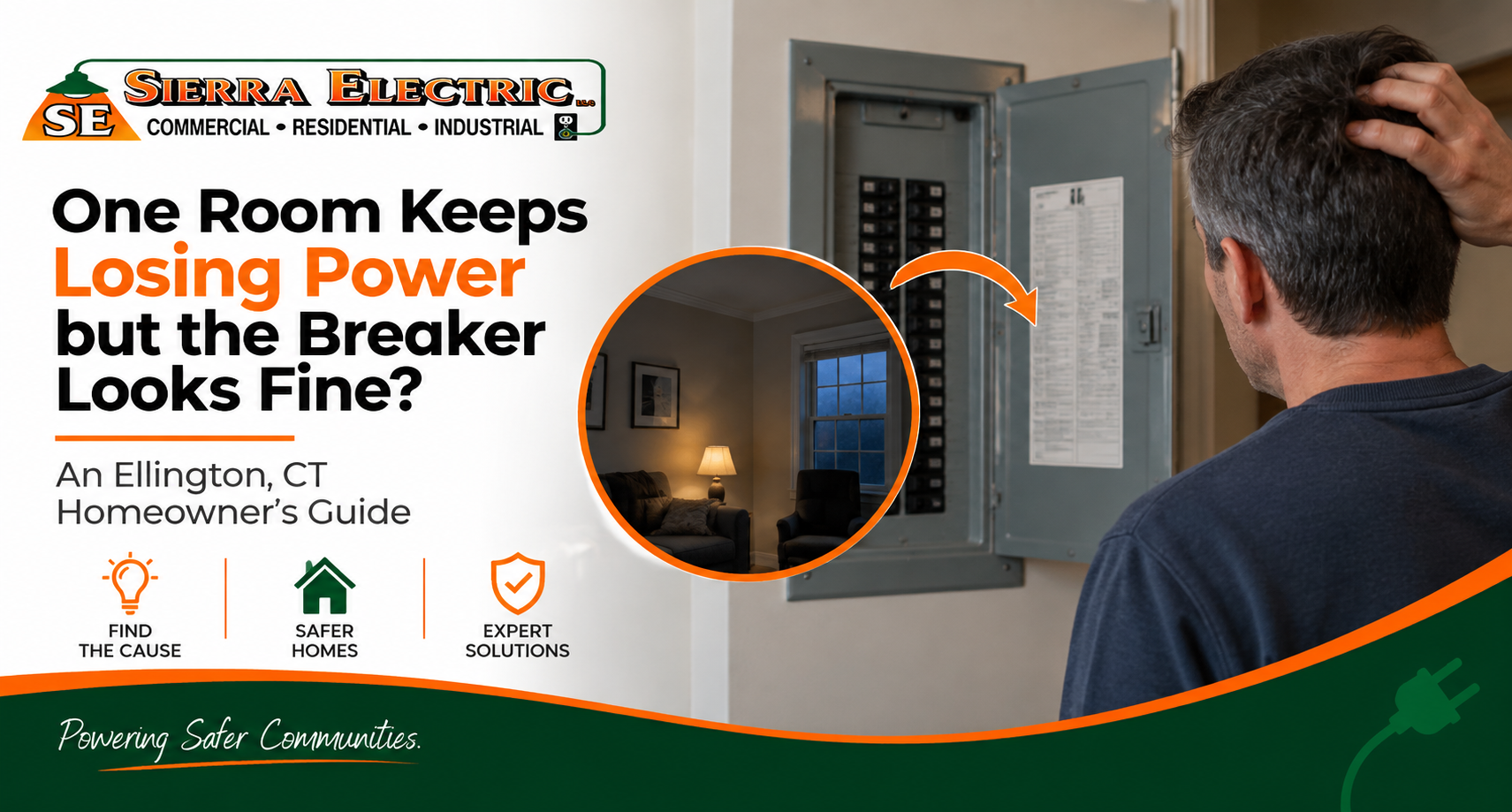
You are sitting in your living room when suddenly the lights, television, or outlets stop working. Naturally, the first place you check is the electrical panel. But what if every breaker appears to be in the correct position?
A room losing power while the breaker looks normal can be confusing for homeowners. Sometimes the cause is relatively simple, while other situations may point to an electrical problem that requires professional diagnosis. For Ellington, CT homeowners, understanding the possible warning signs can help you respond safely instead of repeatedly resetting switches or ignoring the issue.
Start by Understanding What Lost Power
Before assuming the entire room has an electrical problem, notice exactly what stopped working. Are the lights off but the outlets still working? Did several outlets lose power at once? Is only one appliance affected?
These details can help narrow down the problem. An electrician will often want to know when the issue started, what was running at the time, and whether it has happened before.
Companies such as Sierra Electric provide electrical troubleshooting and residential electrical services designed to identify the source of electrical problems rather than relying on temporary fixes.
The Breaker May Have Tripped Without Looking Obvious
Circuit breakers are designed to interrupt electrical flow when certain unsafe conditions occur. However, a tripped breaker may not always appear dramatically different from the others.
This is one reason homeowners can believe everything at the panel looks normal even though a circuit has been interrupted.
The important point is not to repeatedly operate a breaker if it continues tripping. Frequent trips can be a sign that something on the circuit needs attention. Repeatedly restoring power without understanding why it stopped does not address the underlying problem.
A GFCI Outlet Could Affect Other Outlets
Ground-fault circuit interrupter, or GFCI, protection is commonly associated with locations where electricity may be used near moisture. A GFCI device can interrupt power when it detects certain electrical imbalances.
Depending on how a circuit is arranged, one GFCI device may also provide protection to other outlets farther along the circuit. As a result, an outlet in one location may stop working because a protective device elsewhere has operated.
Homeowners looking for the Best electrical troubleshooting service in Ellington, CT should understand why troubleshooting involves more than simply looking at the electrical panel. The visible symptom and the actual source of the problem may be in different locations.
A Problem Could Exist at an Outlet or Connection
If several devices in one area suddenly stop receiving power, the issue may involve part of the circuit serving that area.
Electrical connections can deteriorate or become damaged over time. Outlets and switches can also develop problems. Determining the exact cause requires proper electrical testing rather than guessing.
Homeowners should avoid removing outlets, opening electrical boxes, or working inside the electrical panel unless they are qualified to do so. Electrical components can remain hazardous even when something appears to be switched off.
Pay Attention to What Happens Before the Power Goes Out
Patterns can provide valuable clues.
Does the room lose power when a space heater is turned on? Does it happen when multiple electronics are running? Does the problem appear randomly, or only when a particular appliance is used?
Modern homes use many electrical devices at the same time. Older homes may also have circuits that were designed before today’s level of electrical demand.
Homeowners researching an Affordable electrician in Stafford Springs, CT can see that residential electrical work may involve troubleshooting, wiring, panel work, lighting, generators, EV charging, and other systems. Understanding how different electrical loads interact is an important part of diagnosing recurring power problems.
Don’t Ignore Heat, Odors or Unusual Sounds
A power loss becomes more concerning when it happens alongside other warning signs.
If you notice a burning smell, unusual buzzing or crackling, discoloration around an outlet, visible damage, sparks, or unusual warmth, stop using the affected equipment or area and seek professional electrical assistance.
These symptoms should not be treated as a normal inconvenience. They can indicate a condition that needs prompt evaluation.
If there is smoke, fire, or an immediate danger, leave the area and contact emergency services.
Avoid the Temporary-Fix Cycle
When power returns, it is easy to forget about the problem. But if the same room loses electricity again a few days later, something is causing the interruption.
Repeatedly resetting a breaker, moving appliances between outlets, or using extension cords to work around a dead outlet can hide the symptom without solving the cause.
Instead, keep a simple record of what happened. Note the time, affected outlets or lights, appliances that were operating, and whether any unusual sounds, smells, or heat were present.
That information can make professional troubleshooting more efficient.
Why Professional Troubleshooting Matters
Electrical problems are not always visible. A dead outlet, flickering light, or room without power is a symptom—not necessarily the source.
Professional troubleshooting involves testing the electrical system and following the circuit to identify what is actually causing the interruption. The appropriate solution depends on that diagnosis.
This is particularly important when a problem is recurring, affects several devices, or appears alongside other electrical warning signs.
Final Thoughts
If one room in your Ellington home keeps losing power while the breaker appears normal, don’t assume the issue has disappeared simply because electricity eventually returns.
Start by observing what loses power, when it happens, which appliances are operating, and whether you notice heat, odors, buzzing, sparks, or damaged components. Avoid opening electrical equipment or attempting wiring repairs yourself.
Electrical systems are designed with protective devices for a reason. When the same problem keeps returning, identifying the cause is safer and more useful than repeatedly treating the symptom.